
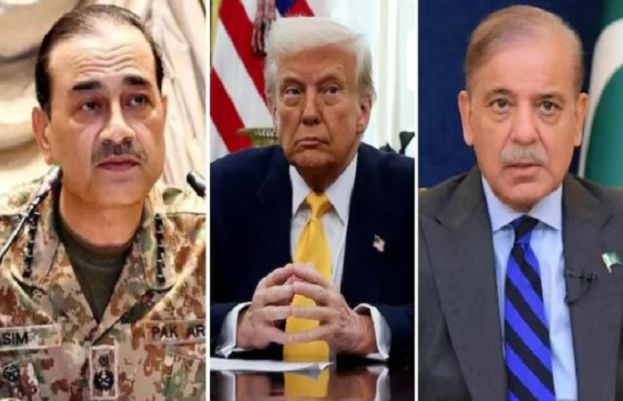
Trump's announcement represented an abrupt turnaround from earlier in the day, when he issued an extraordinary warning that "a whole civilization will die tonight" if his demands were not met. The US president had set an 8pm ET deadline for April 8.
In a statement posted on social media, Trump said the decision was contingent upon Iran agreeing to the “complete, immediate, and safe opening” of the Strait of Hormuz, describing the arrangement as a “double-sided ceasefire”.
"This will be a double sided CEASEFIRE!" Trump wrote on his Truth Social platform. "The reason for doing so is that we have already met and exceeded all Military objectives, and are very far along with a definitive Agreement concerning Longterm PEACE with Iran, and PEACE in the Middle East."
Trump further revealed that Washington had received a 10-point proposal from Tehran, which he described as a “workable basis” for negotiations, adding that most longstanding points of contention between the two sides had already been addressed.
He said the two-week pause would provide an opportunity to finalise and formalise a comprehensive agreement aimed at ending hostilities.
Calling the development a step towards resolving a longstanding conflict, Trump said it was an “honour” to bring the issue close to resolution on behalf of the United States and the wider Middle East region.
Meanwhile, Iranian state TV flashed an announcement claiming that Trump had accepted Iran's terms for ending the war, describing it as a "humiliating retreat" by the US president.
Two White House officials confirmed that Israel has also agreed to the two-week ceasefire and to suspend its bombing campaign on Iran.
His announcement comes hours after PM Shehbaz posted on X, saying that diplomatic efforts for peaceful settlement of the ongoing war in the Middle East were "progressing steadily, strongly and powerfully with the potential to lead to substantive results in the near future."
“To allow diplomacy to run its course, I earnestly request President Trump to extend the deadline for two weeks.”
He also requested Iran to open the Strait of Hormuz for a corresponding period of two weeks. “Pakistan, in all sincerity, requests the Iranian brothers to open the Strait of Hormuz for a corresponding period of two weeks as a goodwill gesture.
“We also urge all warring parties to observe a ceasefire everywhere for two weeks to allow diplomacy to achieve conclusive termination of war, in the interest of long-term peace and stability in the region,” he added.
Talks in Islamabad
Meanwhile, Iran’s Supreme National Security Council has also confirmed the two-week ceasefire, saying that Pakistan's prime minister has informed that the US has accepted Iran’s 10-point plan as the basis for negotiations.
“Accordingly, it was decided at the highest level that Iran will hold negotiations with the American side in Islamabad for two weeks and solely on the basis of these principles. This time can be extended by agreement of the parties," the council said in a statement.
“It is emphasised that this does not mean an end to the war and Iran will accept an end to the war only when — in view of Iran’s acceptance of the principles envisaged in the 10-point plan — its details are also finalised in the negotiations,” it added.
The council added that if the "surrender of the enemy in the field becomes a decisive political achievement in the negotiations, we will celebrate this great historical victory together."
"Our hands are on the trigger, and as soon as the slightest mistake by the enemy is made, it will be responded to with full force," it concluded.
Separately, Iranian Foreign Minister Abbas Araghchi said that a safe passage through the Hormuz Strait is possible for two weeks via coordination with armed forces.
He has shared a statement on behalf of Iran’s Supreme National Security Council declaring that “if attacks against Iran are halted, our Powerful Armed Forces will cease their defensive operations”.
Abrupt turnaround
The abrupt turnaround capped a whirlwind day that was dominated by Trump's threat to destroy every bridge and power plant in Iran unless Tehran reopened the strait, which unnerved world leaders, rattled global financial and energy markets and drew widespread condemnation, including criticism from the head of the United Nations and Pope Leo.
As the clock ticked down to Trump's 8pm ET deadline, US and Israeli strikes on Iran intensified, hitting railway and road bridges, an airport and a petrochemical plant. US forces attacked targets on Kharg Island, home to Iran's main oil export terminal.
In response, Iran declared it would no longer hold back from hitting its Gulf neighbours' infrastructure and said it had carried out fresh strikes on a ship in the Gulf and a huge Saudi petrochemical complex.
Booms were heard in Doha late on Tuesday night, according to a Reuters witness in the Qatari capital.
The war, now in its sixth week, has claimed more than 5,000 lives in nearly a dozen countries, including more than 1,600 civilians in Iran, according to tallies from government sources and human rights groups.
The closure of the strait, through which almost a fifth of the world's oil supply typically travels, has sharply increased oil prices, escalating the chances of a global economic downturn or even recession.
With the US midterm election campaign ramping up, Trump's approval ratings have hit their lowest level ever, leaving his Republican Party at risk of losing its grip on Congress. Polls show sizable majorities of Americans opposed to the war and frustrated by the rising cost of gasoline.