
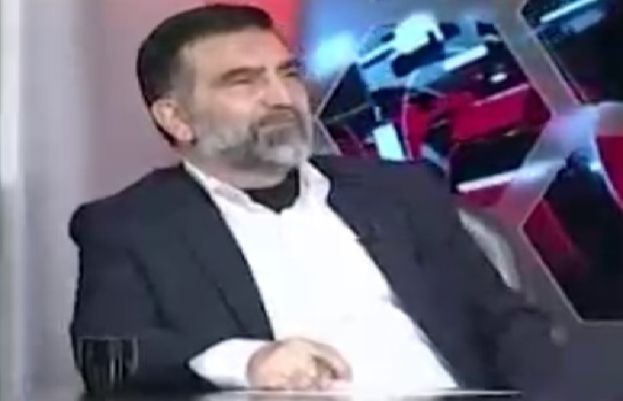
In an interview with a private television channel, Kirmani stated that the unilateral and illegal revocation of Article 370 was part of a broader strategy to erode Kashmir’s special status.
He highlighted how administrative and political powers had been progressively shifted to New Delhi, significantly weakening local autonomy in IIOJK.
Kirmani raised serious doubts about the authenticity of the Instrument of Accession, noting that unlike accession documents of other princely states, it lacked the official state seal and failed to meet clear legal requirements. He pointed out that it only bore signatures, including that of Lord Mountbatten with a contested, predated handwritten date.
Explaining his own decision to leave the Indian Civil Service and his stint at the Power Development Department which he said was heavily controlled by agencies, where Kashmiris were compelled to undertake work that ultimately harmed their own interests and people.
Kirmani said that even before the revocation of Article 370, its provisions had been rendered hollow. He claimed that key administrative positions, such as Deputy Commissioners and Superintendents of Police in districts, were filled by individuals from outside the territory, placing entire administrative control in non-local hands.
Drawing a comparison, he said in Azad Jammu and Kashmir, the deputy commissioners were locals, and the region has its own elected President and Prime Minister, as well as an independent Supreme Court. In contrast, the Supreme Court in IIOJK was long ago downgraded to a High Court, the position of President was abolished in favor of a centrally nominated Governor, and the post of Prime Minister was eliminated.
He added that even now, there is effectively no elected assembly with real power, as the Chief Minister himself has admitted to having no authority.
Kirmani said that India was pursuing a settler colonial project aimed at altering the demographic balance in the Muslim-majority region through changes in permanent residency laws, appointment of outsiders to high positions, and dilution of local opportunities.
He claimed these steps were designed to reduce the Muslim majority, potentially paving the way for a future plebiscite or referendum where India could claim victory once the demographics shift.
He also pointed to the revocation of official status for historical days and traditions as part of efforts to change the region’s identity and eliminate its disputed status.
Kirmani emphasized that India’s actions in IIOJK were linked to broader implications for Muslims in India, asserting that whenever Pakistan appears weak, India advances its agenda in Kashmir and becomes more aggressive toward Indian Muslims.
He expressed the view that the future security and prosperity of Muslims in India are ultimately tied to Pakistan’s strength, as a strong Pakistan prevents extreme measures against them.