
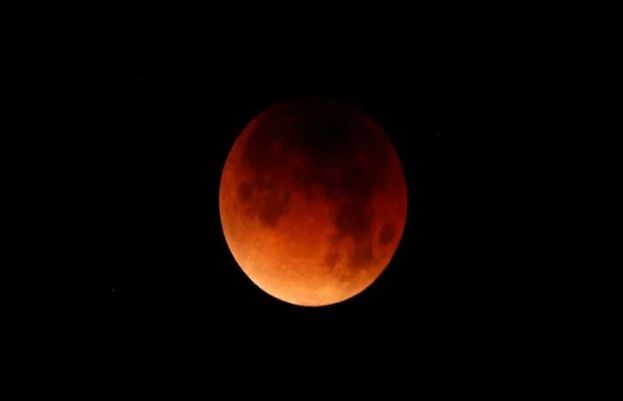
This celestial event happens when the Earth moves directly between the Sun and the Moon, casting its shadow on the Moon’s surface.
According to the Pakistan Meteorological Department, much of the eclipse will take place during daylight hours in Pakistan, meaning it may not be fully visible across the country.
Eclipse Timings (Pakistan Standard Time)
Penumbral eclipse begins: 1:44pm
Partial eclipse starts: 2:50pm
Totality begins: 4:05pm
Peak of eclipse: 4:34pm
Totality ends: 5:03pm
Eclipse concludes: 7:23pm
Observers in some cities may catch the later stages of the eclipse in the evening, depending on moonrise timing and weather conditions.
Why Does the Moon Turn Red?
During a total lunar eclipse:
Earth blocks direct sunlight from reaching the Moon.
Blue light is scattered by Earth’s atmosphere.
Red and orange wavelengths continue through, giving the Moon its deep reddish glow.
Where Will It Be Visible?
Fully visible in eastern Asia and Australia
Visible overnight across the Pacific
Before sunrise in parts of North and Central America
Not visible in most of Africa and Europe
Safe Viewing
Unlike a solar eclipse, a lunar eclipse is completely safe to watch with the naked eye.
For a clearer view, binoculars or a telescope can enhance the experience, especially from areas with minimal light pollution.